
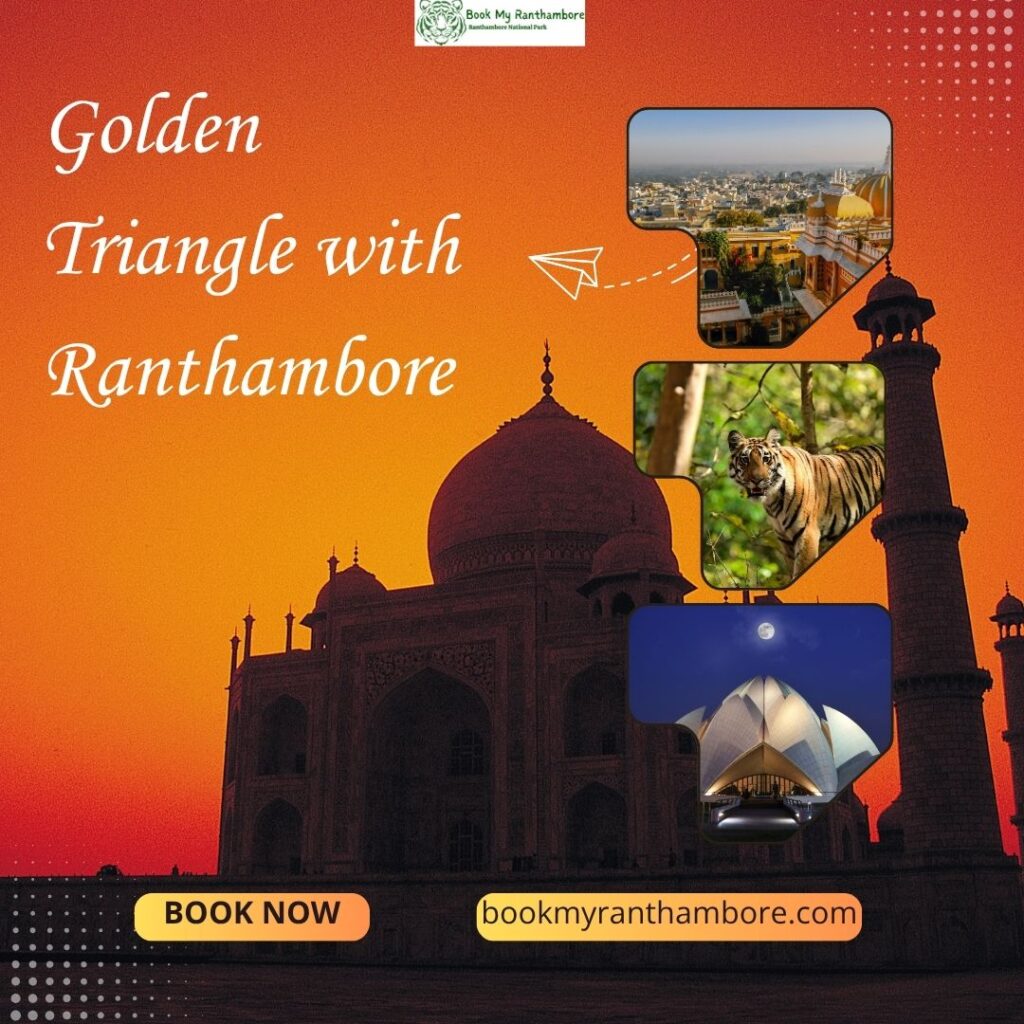
Planning a trip to India is exhilarating, but if I’m being honest, it can also feel a bit like trying to solve a complex puzzle. You want to see the iconic monuments, but you also want that “National Geographic” moment of spotting a Royal Bengal Tiger in the wild. The most frequent question I get from fellow travelers planning this specific route is: “How many days should I actually set aside?”
If you rush it, you’ll end up with a blur of marble and orange dust. If you linger too long, you might lose that travel momentum. After navigating these dusty roads and bustling markets more times than I can count, I’ve found there is a “sweet spot” for the Golden Triangle with Ranthambore Tour.
When I was discussing this recently with the team at Book My Ranthambore, we agreed that the most common mistake people make is trying to cram the safari experience into a single afternoon. To do this right, you need a plan that respects the distance and the wildlife.
Let’s break down the ideal timeline so you can stop stressing over the itinerary and start packing your bags.
The Short Answer: 7 to 8 Days
If you want the “real human” recommendation, 7 to 8 days is the magic number.
Could you do it in five? Technically, yes—if you enjoy living out of a suitcase and viewing India through a car window. But to actually feel the vibe of the cities and have a legitimate shot at seeing a tiger, you need a week. This allows for two nights in Delhi, one in Agra, two in Ranthambore, and two in Jaipur.
Breaking Down the Journey
Days 1 & 2: Finding Your Feet in Delhi
Most international travelers land in Delhi. My best advice? Don’t try to “conquer” Delhi on day one. It’s loud, it’s vibrant, and it’s a total sensory overload.
Day 1: Arrive, settle into your hotel, and maybe take a quiet evening walk through Lodi Gardens. It’s the perfect “soft landing.”
Day 2: Dive into the history. Spend the morning in Old Delhi—take a rickshaw through Chandni Chowk. It’s chaotic, but it’s the heart of the city. In the afternoon, shift to the more manicured side of New Delhi to see Humayun’s Tomb (which was actually the inspiration for the Taj Mahal).
Day 3: The Romance of Agra
On the morning of day three, you’ll head to Agra. It’s about a 3.5 to 4-hour drive via the Yamuna Expressway.
Most people think Agra is just about the Taj Mahal, but the Agra Fort is equally stunning. I always suggest visiting the Taj at sunrise on Day 4, so use the afternoon of Day 3 to explore the Fort or watch the sunset from Mehtab Bagh (the Moonlight Garden) across the river. It gives you a perspective of the Taj without the massive crowds.
Days 4 & 5: Into the Wild (Ranthambore)
This is where the journey departs from the standard tourist trail. After your sunrise Taj Mahal visit, you’ll drive toward Sawai Madhopur, the gateway to Ranthambore National Park.
Why two nights here? Because tiger sightings are never guaranteed. By staying two nights, you get at least three safari opportunities (morning and afternoon).
The Experience: Ranthambore isn’t just about tigers. The landscape is dotted with ancient ruins and a massive 10th-century fort that overlooks the entire park. Even if the big cats are being shy, seeing a leopard or a sloth bear against the backdrop of an old temple is something you won’t forget.
Days 6 & 7: The Pink City (Jaipur)
From the jungle, you’ll head to Jaipur, the capital of Rajasthan. This city is a photographer’s dream.
Day 6: Visit the Amber Fort. My tip? Go early to avoid the heat and the crowds. Spend the afternoon checking out the Hawa Mahal (Palace of Winds). It’s basically a giant, beautiful honeycomb made of pink sandstone.
Day 7: Explore the City Palace and the Jantar Mantar observatory. If you have time, wander through the local bazaars. This is the place to buy textiles, jewelry, and those famous hand-block prints.
Day 8: Back to Reality
On the final day, you’ll drive back to Delhi (about 5 hours) for your flight home. If you’re flying out of Jaipur internationally, you can even squeeze in an extra morning of shopping!
Why You Shouldn’t Rush the “Tiger” Part
I’ve seen people try to do Ranthambore as a day trip from Jaipur. Please, don’t do that to yourself.
Ranthambore is a living ecosystem. The morning safaris start before the sun is up, and the afternoon ones go until dusk. If you’re rushing in and out, you’re missing the quiet moments—the alarm calls of the monkeys, the sun hitting the Padam Talao lake, and the chance to actually relax between drives. A two-night stay gives you the “buffer” you need to actually enjoy the wilderness rather than just checking a box.
Practical Tips for Your 8-Day Trip
1. Transport is Everything
While India has a massive rail network, for a 7-8 day trip, I highly recommend hiring a private car and driver. It sounds fancy, but it’s actually very common and surprisingly affordable. It gives you the flexibility to stop for a chai break or a photo op whenever you want.
2. Best Time to Visit
If you are coming for the wildlife, keep in mind that Ranthambore National Park is closed during the monsoon season (usually July to September). The best time for sightings is between October and April. If you can handle the heat, April and May are actually the best for tiger spotting because the animals frequent the water holes more often.
3. Pack for Variety
You’ll need “city” clothes for Delhi, something respectful for the temples, and “jungle” clothes for Ranthambore. Remember that open-air jeeps in the early morning can be surprisingly chilly, even in India! Bring a light jacket or a scarf.
Final Thoughts
India isn’t just a destination; it’s an experience that requires a bit of breathing room. By dedicating about a week to your Golden Triangle with Ranthambore Tour, you aren’t just seeing monuments; you’re soaking in the culture, the flavors, and the incredible wildlife at a pace that feels human.
It’s the difference between looking at a postcard and actually living in one.
FAQs
1. Is Ranthambore far from the rest of the Golden Triangle?
Not at all! It’s located between Agra and Jaipur. Most travelers visit it after Agra and before Jaipur, making it a very natural “loop” in the itinerary. The drive from Agra is about 4-5 hours, and it’s another 3-4 hours to Jaipur.
2. How do I book safaris in Ranthambore?
Safaris should be booked well in advance through the official government website or via a travel agent. There are two types of vehicles: Jeeps (6-seaters) and Canters (20-seaters). Jeeps are quieter and better for photography, but they sell out fast!
3. What is the best month for this specific tour?
November to February is the most comfortable weather-wise. However, if your primary goal is seeing a tiger, the drier months of March, April, and May are excellent, though it does get quite hot.
4. Do I need a visa for this trip?
Most international travelers require an e-Visa to enter India. It’s a straightforward online process, but make sure to apply at least a few weeks before your departure date.
5. Is it safe for solo travelers or families?
Absolutely. This route is the most popular tourist circuit in India and is very well-equipped for visitors. Just use common sense, stick to reputable transport, and enjoy the incredible hospitality!