
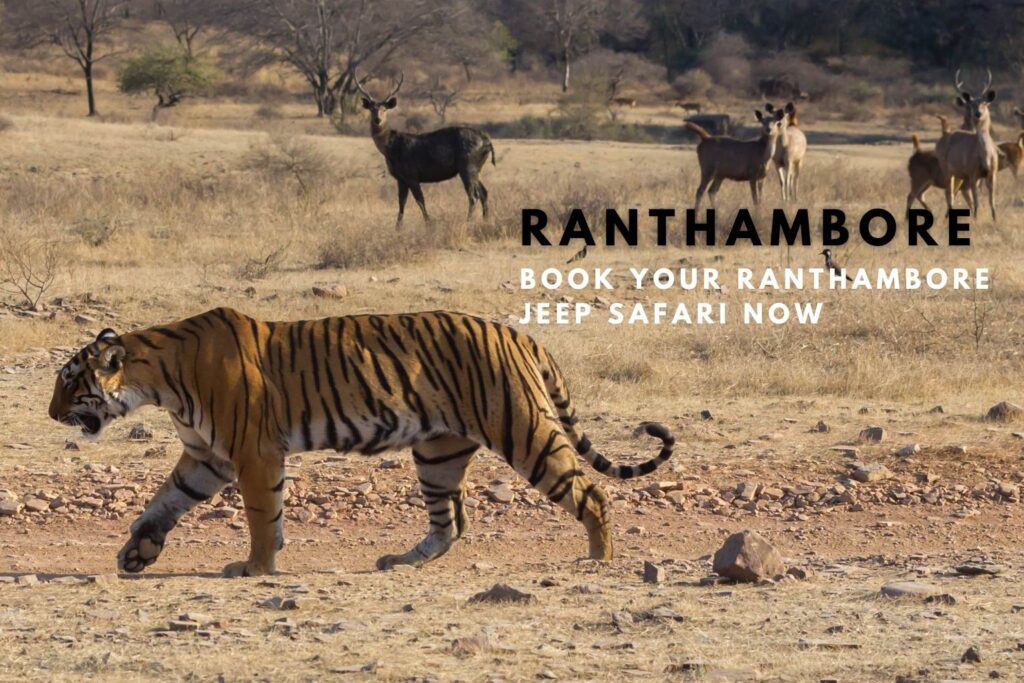
If you’ve ever closed your eyes and imagined the classic Indian jungle ancient ruins overgrown with vines, sun-dappled forest floors, and the breathtaking sight of a Royal Bengal Tiger stalking through the tall grass you’re likely picturing Ranthambore.
Located in the heart of Rajasthan, Ranthambore National Park isn’t just a wildlife sanctuary; it’s a piece of history where nature has reclaimed what was once a royal hunting ground. For travelers coming from across the globe, the big question isn’t whether to go, but how to experience it properly.
While there are a few ways to enter the park, nothing beats the raw, open-air thrill of a Jeep. It’s personal, it’s quiet, and it puts you right in the middle of the action.
Why Choose a Jeep Over a Trotter?
When you’re planning your trip, you’ll notice two main vehicle options: the 20-seater “Canter” (a large open-top truck) and the 6-seater “Jeep” (a rugged 4×4).
If you want the best possible experience, the Jeep is the clear winner. Because it’s smaller, it can navigate the narrow, rocky paths that the larger trucks simply can’t reach. It’s also much quieter. In the jungle, silence is your best friend. A noisy engine or twenty people talking at once can easily scare off a shy leopard or a sloth bear before you even spot them.
In a Jeep, you have a more intimate connection with your guide and naturalist. You can ask questions, ask them to stop for a specific bird photo, and move quickly when a “tiger call” (the warning cry of deer or monkeys) echoes through the trees.
What to Expect on Your Ranthambore Adventure
The safari starts early—really early. But as the cool morning air hits your face and the sun begins to peek over the Aravali hills, the 5:00 AM wake-up call feels totally worth it.
As you pass through the massive stone gates of the park, the landscape changes instantly. One minute you’re in a dusty town, and the next, you’re surrounded by ancient Banyan trees and the crumbling walls of the Ranthambore Fort looming high above.
The park is divided into 10 different zones. While zones 1 through 5 are traditionally the most popular for tiger sightings, every single zone has its own unique beauty. You might find yourself driving alongside a massive lake filled with crocodiles in one zone, or climbing steep, rocky hillsides in another.
The Thrill of the “Tiger Call”
There’s a specific kind of tension that happens during a safari. It’s not just about driving around and looking; it’s about listening. Your guide will suddenly kill the engine. You’ll sit in total silence, listening to the “Ardh-Ardh” of a Sambar deer or the frantic barking of a Langur monkey.
These are alarm calls. They tell the whole jungle that a predator is on the move. When your driver hears that, the adrenaline kicks in. You’ll zip across the terrain, heart racing, hoping to catch a glimpse of orange and black stripes through the Dhok trees.
Practical Tips for Your Safari
Before you head out, there are a few things that will make your day much more comfortable:
Dress in Layers: Even in the hotter months, the early mornings in the open Jeep can be surprisingly chilly. As the sun rises, it gets hot fast. Wear something you can easily peel off.
Muted Colors are Best: You don’t need full camouflage, but try to avoid bright neons. Earth tones like khaki, olive green, or grey help you blend into the environment and don’t distract the animals.
Protect Your Gear: The jungle is incredibly dusty. If you’re bringing a nice camera, bring a soft cloth or a bag to cover it when the Jeep is moving between sightings.
Stay Hydrated: You’ll be out for about three to four hours. Most operators provide water, but it’s always smart to have your own bottle handy.
How to Secure Your Spot
Ranthambore is one of the most famous parks in the world, which means it gets busy. The government limits the number of vehicles allowed in each zone to protect the environment and the animals. Because of this, safaris often sell out months in advance, especially during the peak season from October to April.
If you’re traveling from overseas, you don’t want to show up at the gate and hope for the best. To ensure you get a Jeep rather than a crowded bus, you should book jeep safari in ranthambore as early as possible. Booking in advance allows you to select your preferred shift (morning or afternoon) and gives you a much better chance of landing one of the prime zones.
Beyond the Tigers
While the tiger is the undisputed king of Ranthambore, the park is teeming with other incredible sights. Keep your eyes peeled for:
- Leopards: Often found in the more rocky, mountainous sections of the park.
- Sloth Bears: These shaggy, termite-eating characters are a joy to watch if you’re lucky enough to spot one.
- Marsh Crocodiles: Usually seen sunning themselves on the banks of the lakes.
- Birdlife: With over 300 species of birds, including Kingfishers and Serpent Eagles, it’s a paradise for photographers.
Conclusion
A trip to Ranthambore is more than just a vacation activity; it’s a bucket-list experience that stays with you forever. There is something deeply humbling about sitting in an open Jeep, just a few meters away from a wild tiger as it crosses the road with total indifference to your presence. It reminds us of the raw beauty of the natural world and why we need to protect these wild spaces.
So, pack your camera, grab your hat, and get ready for the ride of a lifetime. The jungle is calling!
Frequently Asked Questions
1. When is the best time of year to visit Ranthambore?
The park is open from October 1st to June 30th. The best time for pleasant weather is between October and March. However, if your main goal is tiger sightings, the hotter months of April, May, and June are actually better, as animals frequent the water holes more often.
2. Is it safe to be in an open Jeep with tigers around?
Yes, it is very safe. The tigers in Ranthambore have grown up seeing Jeeps and do not view them as prey or a threat. As long as you stay inside the vehicle and follow your guide’s instructions (no shouting or sudden movements), there is nothing to worry about.
3. How long does a typical safari last?
Each safari lasts approximately 3 to 3.5 hours. There are two shifts per day: one starting shortly after sunrise and another in the mid-afternoon ending at sunset.
4. Can I choose which zone I want to visit?
When you book, you can request a specific zone, but the final allocation is managed by the forest department to ensure no single area becomes too crowded. This is why booking early is essential to get the best options available.